Clara Washington · 10 September 2026
Leveraging Custom API Connections to Streamline Multi-Platform Reporting Workflows
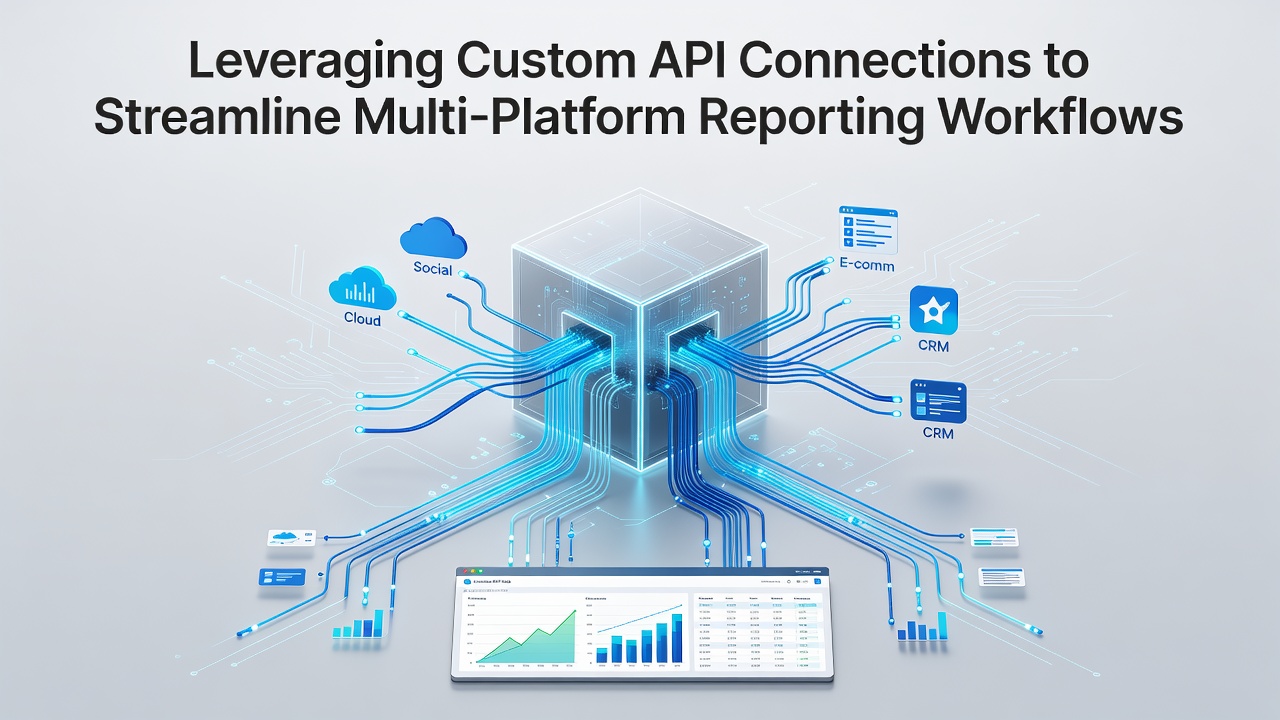
Custom API connections allow organizations to pull data from disparate systems such as CRM tools, analytics suites, financial software, and marketing platforms into unified reporting environments. Researchers at academic institutions have documented how these tailored interfaces reduce manual data handling while maintaining data integrity across sources, and figures from industry reports indicate that companies adopting such connections often achieve faster report generation cycles. Experts note that traditional multi-platform reporting frequently involves exporting files from one system then importing them into another, a process prone to errors and delays. Custom APIs address this by establishing direct, programmable links that fetch, transform, and deliver data in real time or on scheduled intervals. Those who have studied enterprise workflows observe that this approach supports consistent formatting, automated validation checks, and seamless scaling when new platforms join the ecosystem.Core Components of Custom API Integration
Developers typically begin by mapping the data fields required across each reporting platform, then constructing API endpoints that handle authentication, query parameters, and response formatting. Studies from Canadian research centers show that organizations using standardized protocols like OAuth 2.0 combined with JSON or XML payloads experience fewer connection failures during peak reporting periods.
According to data compiled by Statistics Canada on business technology adoption, firms that invest in custom middleware layers between APIs report higher accuracy in consolidated dashboards compared with those relying solely on native connectors. The process also involves setting up error-handling routines and logging mechanisms so teams can trace data lineage when discrepancies arise.
Implementation Patterns Observed in Practice
One study revealed that a mid-sized retailer integrated its e-commerce analytics with inventory management through bespoke APIs, resulting in daily reports that combined sales trends and stock levels without manual intervention. Observers note similar patterns in sectors where regulatory compliance demands frequent, auditable data aggregation from multiple vendors.
Implementation often proceeds in phases: initial scoping of required data points, development of authentication layers, testing for rate limits imposed by source platforms, and deployment with monitoring dashboards. In September 2026 the OECD plans to publish updated frameworks on digital interoperability that many organizations expect will influence how custom API projects prioritize security and data portability standards.

Performance Metrics and Adoption Trends
Research indicates that teams using custom API connections cut report preparation time by measurable percentages, with some case examples documenting reductions from several hours to under thirty minutes per cycle. Government statistical agencies in Australia have tracked similar efficiencies among businesses that automate cross-platform financial and operational reporting.
What's interesting is how these connections support incremental expansion. When a new analytics tool enters the stack, developers can extend existing API logic rather than rebuilding entire pipelines. Data from academic papers on enterprise systems shows that modular designs also simplify compliance audits because each data transfer maintains traceable metadata.
Security and Governance Considerations
Security protocols remain central during API development, with encryption standards, access controls, and regular key rotation forming baseline requirements. Those who've examined data governance frameworks point out that custom connections allow finer-grained permission settings than many off-the-shelf integrations provide.
Organizations frequently establish review boards to evaluate proposed API changes against internal policies, ensuring that data handling aligns with both technical specifications and regulatory expectations. Figures released by various national statistics offices highlight growing adoption rates of such controlled integration methods across industries handling sensitive operational metrics.
Conclusion
Custom API connections continue to reshape how multi-platform reporting workflows operate by enabling direct, reliable data exchange between systems. Evidence from multiple geographic regions demonstrates consistent gains in speed and accuracy when these tailored interfaces replace fragmented manual processes. As standards evolve and new platforms emerge, organizations that maintain flexible API architectures position themselves to adapt without disrupting established reporting routines.