
Gisela Coleman · 8 October 2026
Integrating Legacy Systems with Modern Analytics Dashboards for Seamless Information Flow
Legacy systems continue to power core operations across industries while organizations seek real-time insights from modern analytics dashboards, and integration bridges these environments through structured data pipelines that maintain accuracy and timeliness. Many enterprises still rely on mainframes and older databases that store critical records, yet decision-makers require dashboards that pull live metrics without disrupting established processes, so connectors and transformation layers handle the movement of information from one platform to the next.
Core Components of Legacy Infrastructure
Legacy infrastructure often consists of COBOL-based applications, on-premise databases, and proprietary protocols developed decades ago, and these components handle high volumes of transactional data that remain essential for compliance and daily functions. Researchers at academic institutions have documented how such systems store structured records in formats that differ from current cloud-native schemas, which creates the need for mapping tools that convert fields while preserving original meaning. Data from government technology assessments indicate that organizations in manufacturing and finance sectors retain these platforms because replacement costs exceed current budgets, yet analytics requirements push teams toward hybrid solutions that extract subsets of information without full migration.
Modern Dashboard Capabilities and Data Demands
Contemporary analytics dashboards aggregate metrics from multiple sources into visual interfaces that support filtering, forecasting, and drill-down queries, and they depend on APIs or direct database connections to refresh displays at regular intervals. Studies from research institutions show that these tools process both structured and unstructured inputs, which allows users to track key performance indicators across departments. When legacy data enters the pipeline, transformation steps standardize formats so that visualizations remain consistent, and middleware platforms manage authentication plus error handling during transfers.
Integration Approaches in Practice
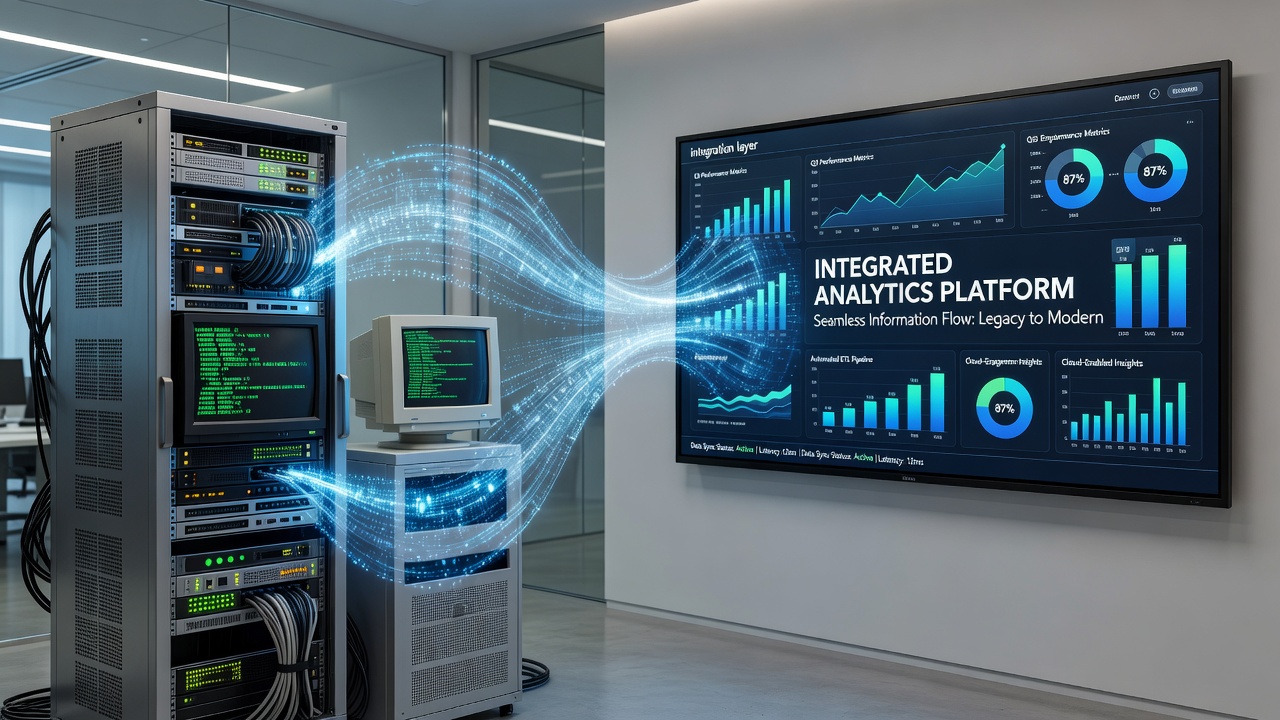
Organizations apply several methods to connect older systems with newer dashboards, including API wrappers that expose legacy functions as REST endpoints, data replication services that mirror selected tables into data warehouses, and event-driven architectures that trigger updates when records change. According to findings published by the National Institute of Standards and Technology, these techniques reduce latency while maintaining audit trails required for regulatory oversight. One logistics company implemented a middleware layer that pulled inventory figures from a 1990s database every fifteen minutes and fed them into a cloud dashboard, resulting in synchronized stock levels across regional sites. Another example involves a healthcare provider that used extract-transform-load routines to move patient scheduling data into an analytics platform without altering the original mainframe workflows.
Challenges Encountered During Implementation
Technical obstacles surface when data formats from legacy sources lack documentation or when security protocols on older systems conflict with modern encryption standards, and teams address these issues through incremental testing that isolates each data stream before full rollout. Reports compiled by the Australian Bureau of Statistics on digital infrastructure note that compatibility testing often extends project timelines, particularly when staff familiar with legacy code have retired. Security considerations require additional layers such as encrypted tunnels and access controls that prevent unauthorized exposure of historical records during transfer. Observers note that phased rollouts, where a single module integrates first, allow organizations to measure performance before expanding scope.
Developments Observed in October 2026
In October 2026, industry surveys recorded expanded use of low-code integration platforms that simplify connections between legacy environments and analytics tools, and adoption rates rose among mid-sized enterprises seeking to avoid custom coding expenses. Figures from technology research groups revealed that organizations reported improved data freshness in dashboards after deploying these platforms, which in turn supported faster reporting cycles. European Union digital economy reports highlighted similar patterns across member states where standardized data exchange formats reduced mapping errors during integration projects.
Measured Outcomes from Deployed Solutions
Performance metrics collected after integration projects show reductions in manual data entry and faster identification of operational trends, with one study from a university business school tracking a 40 percent decrease in report generation time at participating firms. These results stem from automated pipelines that replace spreadsheet-based reconciliation steps, while audit logs generated by the integration layer satisfy record-keeping requirements without additional manual effort. Continued monitoring of system health ensures that data flows remain stable even as source volumes increase.
Conclusion
Integration of legacy systems with modern analytics dashboards relies on proven middleware, API strategies, and data transformation routines that preserve operational continuity while enabling timely insights. Organizations that follow documented implementation patterns achieve consistent information flow across platforms, and ongoing refinements based on usage data keep these connections reliable as requirements evolve.